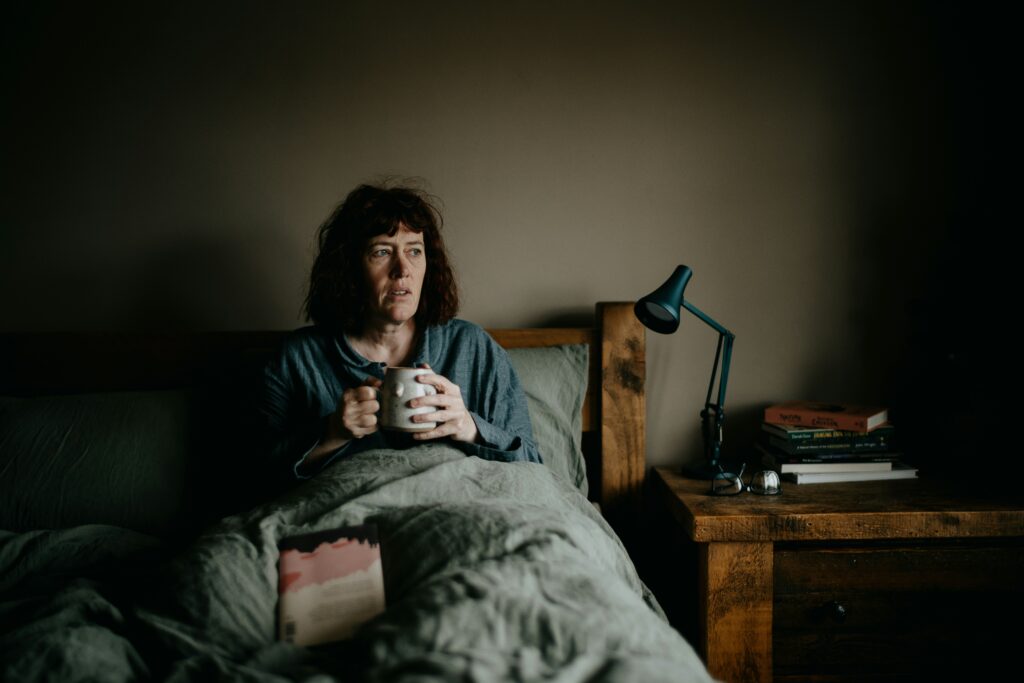

You change just before leaving the house, pack extra protection and check where the nearest bathroom will be. You can get through work or a long drive, but you’re always calculating how much time you have.
When you’ve lived with endometriosis for years, heavy bleeding can become another part of the routine. Pain gets most of the attention, while the flooding, overnight changes and exhaustion are things you’ve learnt to manage.
But endometriosis and heavy periods don’t always have the same explanation. Your flow may reflect changes in ovulation, another condition within the uterus, or how your body controls bleeding. Understanding those differences can help explain why treating the pain hasn’t necessarily made your periods lighter.
Endometriosis and heavy periods: what counts as heavy?
When heavy periods start to feel normal
“A bit heavy” means different things to different women. Your friend might mean changing an extra pad. You might mean setting an alarm at 2 am so you don’t bleed through the sheets.
We rarely compare those details. If your mum or sisters also have heavy periods, you may have grown up believing this is simply what periods are like.
Over time, the adjustments become automatic. Dark clothes, spare underwear, a towel on the bed. You stop thinking of them as signs of a problem because they’re how you’ve always managed.
Signs your period may be too heavy
Signs of heavy menstrual bleeding include soaking through a pad or tampon every one to two hours, needing overnight changes, flooding through clothes or bedding, and passing clots larger than an Australian 50 cent coin. Bleeding beyond eight days also deserves attention, although a period can be short and still involve substantial blood loss.
How it affects your life matters too. Avoiding swimming, missing work or worrying about leaking throughout a meeting all count, even if you’ve found ways to cope.
You don’t need to measure your blood loss before seeking help. The amount of planning your period requires already tells you something.
Endometriosis and heavy periods: is there always a connection?
An endometriosis diagnosis can finally give your symptoms a name. But it shouldn’t become the explanation for every change in your cycle.
Endometriosis involves tissue similar to the uterine lining growing outside the uterus. Menstrual bleeding comes from the lining inside it. That distinction matters, because other conditions may be contributing to your flow.
When adenomyosis, fibroids or polyps may be part of the picture
Adenomyosis is particularly relevant when periods are both heavy and painful. It involves tissue similar to the uterine lining within the muscular wall of the uterus, and it can occur alongside endometriosis.
If you’ve had endometriosis treatment but still experience heavy bleeding, adenomyosis is one possibility to revisit.
Fibroids and polyps can also contribute. Fibroids grow in or around the uterine muscle, while polyps grow from the inner lining. Location matters: a growth that affects the uterine cavity may influence bleeding differently from one elsewhere.
Finding out whether one of these conditions is contributing can help explain why your bleeding has continued and guide the treatment you discuss with your gynaecologist.
Why a sudden change in your flow deserves attention
Perhaps your periods have always been painful, but flooding is new. Or a five day bleed now continues for eight or nine days.
Familiar pain can make a new bleeding pattern feel like more of the same. It still deserves assessment.
Changes in ovulation, perimenopause, medicines and conditions within the uterus can all alter your flow. Heavier bleeding doesn’t automatically mean your endometriosis has progressed.
Progesterone and heavy periods: hormone levels are only part of the story
You’ve probably heard that heavy periods can be a sign of low progesterone. Sometimes reduced progesterone production is relevant, but there are two different questions here: how much you make, and how your tissue responds.
How changes in ovulation can mean less progesterone
Most of your progesterone is produced after ovulation. Without ovulation, you miss that usual rise in progesterone, leaving the uterine lining without its normal progesterone influence. The lining can then grow and shed less predictably. You might notice longer gaps between periods followed by a particularly heavy bleed, especially as ovulation becomes less consistent during perimenopause.
That pattern tells a different story from heavy bleeding that arrives regularly every month. Both need attention, but they don’t necessarily need the same approach.
Progesterone resistance: when the tissues responds differently
Your cells receive progesterone’s signals through receptors. In endometriosis, researchers have identified changes in those receptors and the way the signal is carried through the cell. This is called progesterone resistance.
In other words, progesterone may be present, but the tissue doesn’t respond as expected. That’s different from not making enough after ovulation. It helps explain why a hormone result cannot tell the whole story (although heavy bleeding alone doesn’t tell us that progesterone resistance is the cause).
Could the way you make and process oestrogen matter?
When you’re dealing with endometriosis and heavy periods, you’ll often hear about “oestrogen dominance”. I’m not a fan of that term because it doesn’t explain why oestrogen may be having a stronger effect, or what actually needs attention.
Oestrogen helps build your uterine lining. Its influence depends partly on how much you produce, but also on how it is processed and cleared. A predictable cycle doesn’t rule out a hormonal contribution to heavy bleeding, and a blood oestrogen result alone doesn’t tell the whole story.
In my clinical work, I also see heavy bleeding improve when I include support aimed at oestrogen metabolism. There is some preliminary research alongside that observation.
Your liver and gut both help process oestrogen, with some recycled back into circulation before it leaves the body. That makes digestive health and bowel function relevant to my assessment. I consider these alongside your bleeding pattern and any fibroids or adenomyosis, rather than assuming every heavy period has the same hormonal explanation.
Blood clotting and inflammation: how your uterus controls bleeding
When your period is heavy, it’s natural to focus on how much lining you’re shedding. But the uterus also needs to control the bleeding as that lining comes away.
That means sealing the small blood vessels underneath and repairing the exposed surface. Inflammation and the balance between forming and breaking down clots help coordinate this process. If these mechanisms aren’t working effectively, bleeding can be heavier or take longer to settle.
How your body stops period bleeding – and why clots don’t tell the whole story
If you’re passing large clots, you might wonder how a clotting problem could be involved. Surely those clots mean your blood is doing what it needs to?
The distinction is where the clot forms and what it achieves. To limit blood loss, your body forms small plugs that seal exposed blood vessels in the uterine lining. The clots you pass are blood that has already left those vessels and thickened before leaving your body. They don’t tell you whether the bleeding has been stopped at its source.
That means you can pass large clots and still have difficulty controlling blood loss. Clots alone don’t diagnose a bleeding disorder, but they don’t rule one out either.
Bleeding elsewhere can also give you useful information. Frequent nosebleeds, unexplained bruising or prolonged bleeding after dental work might seem unrelated to your cycle, but together (especially with a family history of similar symptoms) they can suggest a bleeding disorder.
Your doctor can assess this with a platelet count and other clotting blood tests. Although some disorders don’t show up on routine tests, which is why your history matters alongside the numbers.
Endometriosis and heavy periods: could histamine contribute?
Your heavy period may arrive with more than heavy bleeding and cramps. Perhaps it’s also the week you get migraines, feel unusually anxious or experience flushing and exhaustion. When each symptom gets addressed separately, the fact that they arrive together can be overlooked. In consultation, that timing is something I pay attention to – not because it identifies a single cause, but because it helps me decide what else deserves investigation.
One possible connection involves mast cells – the immune cells that release histamine. They have been found in the uterus, and researchers have also identified increased mast cell activity within endometriosis lesions. They can also release heparin, a substance that reduces clotting, which has prompted research into whether mast cell activity could contribute to abnormal uterine bleeding. That’s a very possible link, but is more likely a contributor to a heavy period vs the entire cause.
Some small published case reports have described improvements in abnormal uterine bleeding after treatment targeting mast cells, although this hasn’t established a treatment for heavy periods in endometriosis. For me, the practical point is to consider your bleeding alongside the other symptoms you experience. Those details can help guide a more individual assessment, while the usual causes of heavy bleeding are investigated.
Nutrition support for endometriosis and heavy periods
When heavy periods leave you depleted month after month, nutrition becomes part of helping you recover. I look at what you’re losing through bleeding, whether you’re getting and absorbing enough to replace it, and how your food choices may support your wider endometriosis symptoms. The aim is to help you regain your energy while addressing why your flow is heavy in the first place.
Could changing or avoiding dairy help your period symptoms?
When your period is heavy enough to dictate what you wear or whether you leave the house, the milk in your morning coffee probably feels beside the point. Yet some women with endometriosis find their periods easier to manage after changing the dairy they eat.
One possible explanation brings us back to histamine.
Many cow’s milk products contain A1 casein. During digestion, this protein can release a substance called beta-casomorphin-7. Some research suggests this pathway may promote gut inflammation and trigger histamine release in susceptible people.
Women with endometriosis often report improvements in pain and digestive symptoms after reducing dairy. An easier period may therefore mean less bloating or pain, and for some people, a lighter period.
Before you clear out the fridge though, the type of dairy matters. Goat’s and sheep’s milk contain predominantly A2-type beta-casein, which breaks down differently from A1 casein. Some women tolerate these better than cow’s dairy, while others feel better avoiding dairy altogether. They still contain lactose, so they may not suit you if that contributes to your digestive symptoms. Aged cheeses can also be high in histamine, whichever animal the milk comes from.
This is why I look at the type of dairy you eat and how you respond to it before recommending you cut it out.
Iron deficiency: what heavy periods can take out of you
Your period may have finished, but you’re still dragging yourself through the afternoon or getting breathless on your usual walk. When bleeding is heavy month after month, there may not be enough time to replace what you’ve lost before the next cycle begins.
Iron deficiency can develop before haemoglobin falls into the anaemic range. So a normal haemoglobin result doesn’t rule out depleted iron stores, or mean the exhaustion should be dismissed. I look at the full iron picture alongside your symptoms and bleeding pattern.
There may also be a connection in the other direction. A small study found altered platelet function in women with iron deficiency anaemia, raising the possibility that deficiency could affect how effectively bleeding is controlled. It’s a finding worth considering, although we need stronger evidence to understand its contribution to heavy periods.
With endometriosis, there’s another layer. Repeated bleeding within lesions can leave iron accumulating locally, where it can promote oxidative stress and inflammation. At the same time, heavy menstrual blood loss can leave the rest of your body short of iron. These processes can coexist: iron around a lesion doesn’t mean you have adequate stores to support your energy and recovery.
This is why replacing iron sometimes needs more attention than simply adding a supplement. If your levels aren’t improving, I consider whether ongoing bleeding is outpacing replacement, whether you’re tolerating the treatment and whether something is limiting absorption. Persistent digestive symptoms may warrant investigation for gut conditions or infections that can contribute to deficiency.
The aim is to restore your iron while addressing what keeps depleting it, so you have a better chance of recovering between periods rather than starting each cycle already running low.
Getting support for endometriosis and heavy periods
Investigating endometriosis and heavy periods
A few specific details can tell far more than “my periods are heavy”: how often you change fully soaked protection, whether you flood overnight, how long bleeding lasts and what has changed from your usual pattern. Previous blood results, ultrasound reports and your response to treatment help build on that history.
What to discuss with your GP – and when to seek urgent care
Your GP can assess the bleeding, check for iron deficiency and anaemia, and arrange investigations or treatment where needed. Mention bleeding between periods or after sex, a sudden change in flow, and any history of easy bruising or prolonged bleeding elsewhere.
Seek urgent medical assessment if you’re soaking through a pad or tampon every hour for two hours or more, particularly if you feel dizzy, weak or unwell. Fainting, chest pain or significant breathlessness need emergency care. Heavy bleeding when pregnancy is possible also needs prompt assessment.
Endometriosis and heavy periods: looking at the bigger picture
If you’re planning your days around flooding, packing spare clothes or struggling to recover before your next period arrives, it’s understandable that heavy bleeding has started to feel like another part of living with endometriosis.
But having an explanation for your pain doesn’t always mean you have an explanation for your heavy periods.
In consultation, I look at your bleeding pattern alongside your iron levels, cycle changes, digestion and response to treatment. Bringing those details together can help clarify what needs further medical investigation and where nutritional support may help you regain your energy.
If you’d like support with endometriosis and heavy periods, you can book a consultation with me here.
Warm regards,

References
- Afrin, L. B., Dempsey, T. T., Rosenthal, L. S., & Dorff, S. R. (2019). Successful mast-cell-targeted treatment of chronic dyspareunia, vaginitis, and dysfunctional uterine bleeding. Journal of Obstetrics and Gynaecology, 39(5), 664–669. https://doi.org/10.1080/01443615.2018.1550475 PubMed
- Elstrott, B. K., Lakshmanan, H. H. S., Melrose, A. R., Jordan, K. R., Martens, K. L., Yang, C.-J., Peterson, D. F., McMurry, H. S., Lavasseur, C., Lo, J. O., Olson, S. R., DeLoughery, T. G., Aslan, J. E., & Shatzel, J. J. (2022). Platelet reactivity and platelet count in women with iron deficiency treated with intravenous iron. Research and Practice in Thrombosis and Haemostasis, 6(2), Article e12692. https://doi.org/10.1002/rth2.12692 PubMed
- James, A. H. (2016). Heavy menstrual bleeding: Work-up and management. Hematology, American Society of Hematology Education Program, 2016(1), 236–242. https://doi.org/10.1182/asheducation-2016.1.236 American Society of Hematology
Tang, H.-C., Lin, T.-C., Wu, M.-H., & Tsai, S.-J. (2024). - Progesterone resistance in endometriosis: A pathophysiological perspective and potential treatment alternatives. Reproductive Medicine and Biology, 23(1), Article e12588. https://doi.org/10.1002/rmb2.12588 National Cheng Kung University
- Van Langendonckt, A., Casanas-Roux, F., & Donnez, J. (2002). Iron overload in the peritoneal cavity of women with pelvic endometriosis. Fertility and Sterility, 78(4), 712–718. https://doi.org/10.1016/S0015-0282(02)03346-0