
Polycystic Ovary Syndrome (PCOS/PMOS): Naturopathic Support for Hormones, Cycles and Fertility
If you've been diagnosed with Polycystic Ovary Syndrome (PCOS), recently renamed Polyendocrine Metabolic Ovarian Syndrome (PMOS), or suspect something isn't quite right with your hormones or cycle, you may be dealing with irregular or absent periods, acne, unwanted hair growth, hair thinning, weight changes, fatigue or fertility challenges. PCOS/PMOS can affect much more than the ovaries, which is why my approach looks at your individual hormonal, metabolic and cycle pattern rather than treating every woman with the condition in the same way.
Why a PCOS/PMOS diagnosis doesn't always explain the whole picture
For some women, getting a diagnosis brings clarity. For others, it raises a whole new set of questions.
You may have been told your blood tests are “normal”, your ultrasound is borderline, or that you don’t quite meet the criteria despite having many of the symptoms. Or you may have the diagnosis but still be wondering why your periods are irregular, why your skin or hair has changed, why weight feels harder to manage or why fertility has become more complicated.
One of the reasons PCOS/PMOS can be confusing is that it doesn’t look the same in every woman.
Some women have clear androgen excess. Others have insulin resistance. Some have both, while others have a different hormonal or metabolic pattern altogether.
A diagnosis tells us what you have. It doesn’t necessarily explain why your particular symptoms have developed, why they change over time or why the same treatment can work well for one woman but not another.
That’s where the detective work begins.
My role is to work alongside your GP, endocrinologist or fertility specialist to understand what your individual hormone, metabolic and cycle pattern is telling us and where additional support may be useful.
What is PCOS/PMOS?
Despite the original name, PCOS isn’t simply a condition of “polycystic ovaries”.
The newer term Polyendocrine Metabolic Ovarian Syndrome (PMOS) better reflects the fact that this is a hormonal, metabolic and reproductive condition that can influence ovulation, androgen signalling and, for many women, the way the body regulates insulin and blood sugar.
For now, I’ll continue to use PCOS throughout much of this page because it remains the term most women know and search for, while also referring to PMOS where relevant.
PCOS/PMOS also cannot be diagnosed from an ultrasound alone. Diagnosis considers your menstrual cycle, signs of androgen excess and ovarian features where relevant, while ruling out other conditions that can create a similar picture.
This is why two women can meet the same diagnostic criteria and still have very different symptoms, hormone patterns and metabolic findings.
How is PCOS/ PMOS diagnosed?
Many women tell me they’ve been given mixed messages about whether they “really” have PCOS. One doctor says yes, another says no, and an ultrasound or blood test may not seem to provide a clear answer.
That’s because PCOS can’t be diagnosed using a single test.
Diagnosis is based on a combination of your symptoms, medical history, blood tests and, where appropriate, an ultrasound. Healthcare providers also need to exclude other conditions that can cause similar symptoms, such as thyroid disorders, elevated prolactin, non-classic congenital adrenal hyperplasia and hypothalamic amenorrhoea.
The most commonly used diagnostic criteria are the Rotterdam Criteria, which require two of the following three features:
- irregular or absent ovulation
- clinical or biochemical signs of androgen excess
- polycystic ovarian morphology on ultrasound
This means two women can both be diagnosed with PCOS while having very different symptoms and hormone patterns. Understanding what is driving your particular presentation is often more helpful than the diagnosis alone.
Androgens explained in plain language
One of the biggest reasons two women with PCOS can look completely different is because their androgen patterns are different.
You may have been told your testosterone is “normal” and assumed that ruled out androgen-related symptoms such as acne, unwanted facial hair or hair thinning.
Not necessarily.
Testosterone is only one part of the androgen picture.
Women naturally produce several androgens, including testosterone, androstenedione and DHEA-S, from both the ovaries and adrenal glands. These hormones play important roles in normal female physiology, but in PCOS the way they’re produced, converted, cleared or experienced by tissues can become altered.
Some women have clearly elevated androgen levels. Others have relatively subtle blood-test changes but greater sensitivity of the skin or hair follicles to those hormones.
So the more useful question isn’t simply, “Is testosterone high?”
It’s which androgen pathways are involved and how they’re contributing to your symptoms.
What can drive PCOS patterns (and why identifying drivers matters)
PCOS is often treated as though every woman has essentially the same condition.
She doesn’t.
For one woman, insulin resistance may be central to the picture. For another, adrenal androgen production, disrupted ovulation or a combination of hormonal and metabolic factors may be more important.
This helps explain why generic PCOS advice can work brilliantly for one woman and make very little difference for another.
Not every driver below will apply to everyone. The aim is to understand which patterns are most relevant to you so treatment can be targeted accordingly.
Insulin resistance and metabolic signalling
One of the most common reasons insulin resistance is missed is that blood glucose can still look perfectly normal.
Insulin resistance develops when cells become less responsive to insulin, the hormone that helps move glucose from the bloodstream into cells for energy. The body compensates by producing more insulin, sometimes for years, to keep blood glucose within the normal range.
So a normal fasting glucose doesn’t necessarily tell us how hard the body is working behind the scenes to maintain it.
When insulin resistance is present in PCOS, higher insulin signalling can stimulate ovarian androgen production and interfere with normal ovulation. It may also contribute to weight gain, increased hunger, energy fluctuations and difficulty regulating blood sugar.
But not every woman with PCOS has insulin resistance.
The important question is whether insulin is actually driving your pattern, because that should influence how treatment is approached.
Androgen signalling: it’s about more than testosterone
Another common misconception is that PCOS means having high testosterone.
Sometimes it does. But androgen signalling is much more complex than one number on a pathology report.
Symptoms may reflect higher production of ovarian androgens, increased adrenal androgens such as DHEA-S, altered conversion between hormones, changes in clearance, or greater sensitivity of tissues such as the skin and hair follicles.
This helps explain why some women have significant acne, unwanted hair growth or hair thinning while repeatedly being told their testosterone is “normal”.
Looking at the broader androgen picture can reveal a very different story, and help explain why two women with PCOS can have similar symptoms for completely different hormonal reasons.
Adrenal-driven PCOS patterns
Some women with PCOS assume insulin resistance is always the main driver.
For some women, that’s true. But for a smaller subgroup, the picture looks quite different.
Instead of ovarian androgens or insulin resistance dominating the clinical picture, adrenal androgens are more prominent, often reflected by higher DHEA-S relative to ovarian androgens.
In these women, insulin resistance and inflammation are not always the primary drivers. Instead, adrenal hormone regulation appears to be more upregulated at a signalling level, and menstrual cycles may be less disrupted than in more typical anovulatory PCOS.
Recognising this pattern is important because it changes the focus of treatment. Rather than concentrating primarily on metabolic strategies, support may be directed towards adrenal regulation, nervous system health, sleep and overall resilience.
Ovulation, progesterone signalling, and cycle disruption
One of the most frustrating aspects of PCOS is the unpredictability. Your periods may be irregular, months apart, or you may never be quite sure whether you’ve ovulated.
It’s easy to assume this means you’re simply “low in progesterone”, but that’s usually only part of the story.
Progesterone is produced after ovulation. When ovulation doesn’t occur consistently, progesterone naturally remains lower because the body hasn’t released an egg. In other words, low progesterone is often a consequence of disrupted ovulation rather than the primary problem itself.
The more important question is why ovulation isn’t happening regularly.
Depending on the individual, this may be influenced by insulin signalling, androgen excess, inflammation, stress physiology or other hormonal drivers. Identifying what’s disrupting ovulation helps guide treatment, rather than simply replacing the hormone that’s missing.
Inflammation, stress, and overall load
You may have noticed that your skin flares, your cycles become more irregular, or managing your weight feels even harder during periods of prolonged stress.
That is definitely no coincidence.
Low-grade inflammation is increasingly recognised as part of the PCOS picture, and it interacts closely with hormone signalling, ovulation and metabolism. At the same time, chronic stress influences communication between the brain, ovaries and adrenal glands, affecting many of these same pathways.
Stress doesn’t cause PCOS, but it can amplify the hormonal and inflammatory processes already present, making symptoms more noticeable or more difficult to manage.
When relevant, I also consider sleep quality, nervous system regulation and overall stress load because they can influence how resilient the body is and how strongly PCOS expresses itself.
Environmental influences
Our environment has changed dramatically over the past 70 years, and researchers continue to investigate whether this may be contributing to the growing prevalence of hormone and metabolic conditions such as PCOS.
Particular attention has focused on endocrine-disrupting chemicals (EDCs), which are found in some plastics, pesticides, personal care products and industrial chemicals. These compounds can interact with hormone receptors and may influence insulin signalling, androgen production, ovarian function and metabolism.
Environmental exposures are unlikely to be the sole cause of PCOS, but they may contribute to the overall hormonal and metabolic load in genetically susceptible women.
The goal isn’t to eliminate every exposure. It’s to identify where unnecessary exposures can be reduced as one part of supporting your overall hormonal health.
PCOS and weight gain
One of the biggest frustrations I hear from women with PCOS is, “I’m doing all the right things, so why is my weight still going up?”
Weight gain is common in PCOS, but it isn’t universal, and it isn’t required for diagnosis. Many women with PCOS are a healthy weight, while others find that losing weight feels significantly harder than it used to.
Rather than being explained by calories alone, weight changes in PCOS often reflect what’s happening underneath. Depending on the individual, this may involve insulin resistance, androgen signalling, altered appetite regulation, chronic inflammation or other hormonal changes that influence how the body stores and uses energy.
Understanding what’s driving weight gain is often far more useful than focusing on the number on the scales. It allows treatment to target the underlying physiology rather than relying on increasingly restrictive diets that don’t address the reason weight became difficult to manage in the first place.
PCOS and fertility
One of the first questions many women ask after being diagnosed with PCOS is whether they’ll be able to have children.
The reassuring news is that many women with PCOS conceive naturally.
For others, the main challenge is that ovulation occurs less often or unpredictably, making it more difficult to identify fertile windows and achieve pregnancy. Depending on your individual pattern, factors such as insulin resistance, androgen signalling, inflammation and body weight may also influence fertility.
Understanding why ovulation isn’t occurring consistently is often the key to improving fertility outcomes.
For some women, optimising nutrition, metabolic health and hormone signalling is enough to restore regular ovulation. Others benefit from ovulation induction medications or IVF. The right approach depends on your individual circumstances and should always work alongside your fertility specialist or gynaecologist.
When PCOS isn’t the whole story
Receiving a diagnosis of PCOS can answer many questions, but it doesn’t necessarily explain every symptom you’re experiencing.
For example, while some women with PCOS experience discomfort related to enlarged ovaries or ovulation, significant or persistent pelvic pain isn’t considered a typical feature of PCOS itself.
When symptoms don’t quite fit the diagnosis, it’s important to consider whether another condition may also be contributing.
Endometriosis, adenomyosis, pelvic floor dysfunction, ovarian cyst complications, bladder pain syndrome and gastrointestinal conditions can all occur alongside PCOS and may require a different assessment and treatment approach.
Understanding what each diagnosis does (and doesn’t) explain is often the key to making sense of persistent symptoms and developing a treatment plan that addresses the whole clinical picture.
PCOS vs hypothalamic amenorrhoea (HA): why they’re often confused
Not every woman with irregular or absent periods has PCOS.
Hypothalamic amenorrhoea (HA) can look surprisingly similar, with disrupted ovulation, irregular or missing periods and, in some cases, overlapping hormone patterns. It’s one of the reasons getting the diagnosis right is so important.
The difference lies in what’s happening underneath.
HA is typically driven by low energy availability, under-fuelling, excessive exercise, significant psychological stress, or a combination of these factors. The brain responds by reducing reproductive hormone signalling, making ovulation less likely.
PCOS, on the other hand, reflects a different pattern of hormonal and metabolic dysfunction. While both conditions can affect ovulation, they require very different treatment approaches.
This distinction matters because strategies that help PCOS—particularly those focused on calorie restriction or weight loss—can sometimes make hypothalamic amenorrhoea worse. Likewise, the approach used to restore ovulation in HA won’t necessarily address the underlying drivers of PCOS.
Medications and why they don’t address the whole picture
Many women ask whether taking the oral contraceptive pill, metformin or a GLP-1 medication means they’ve “treated” their PCOS.
The answer depends on what you’re trying to achieve.
These medications can be valuable tools and, for many women, play an important role in managing symptoms such as irregular cycles, insulin resistance or weight. For some women, they can be an appropriate part of long-term care.
At the same time, medication doesn’t necessarily explain why PCOS developed or why your symptoms look the way they do. It may improve one aspect of the condition without addressing other factors such as androgen signalling, ovulation, inflammation or the hormonal and metabolic drivers contributing to your individual pattern.
That’s why I see medical treatment and naturopathic care as complementary rather than competing. The goal isn’t to replace medication when it’s needed, but to better understand the physiology underneath so you’re supporting your long-term health as well as managing symptoms.
Frequently Asked Questions
Find answers to common questions about endometriosis, naturopathic care, and Alexandra’s services.
No. Ultrasound is only one part of the diagnostic process. PCOS is diagnosed using a combination of your symptoms, medical history, blood tests and, where appropriate, ultrasound findings, while excluding other conditions that can cause similar symptoms.
Yes. Despite its name, PCOS isn’t defined by ovarian cysts. Some women with PCOS don’t have polycystic ovaries on ultrasound, while others have polycystic ovaries without meeting the diagnostic criteria for PCOS.
Yes. While irregular ovulation is common, some women with PCOS continue to have regular or near-regular menstrual cycles. Other features, such as androgen excess or polycystic ovarian morphology, may still be present.
Yes. Many women with PCOS have a healthy body weight. While weight gain is common, it isn’t required for diagnosis, and lean women can still experience irregular ovulation, androgen-related symptoms and fertility challenges.
Yes. Some women with PCOS have blood tests that fall within the reference range. Diagnosis isn’t based on one blood test alone and considers your symptoms, cycle history, clinical signs and, where appropriate, ultrasound findings.
No. Insulin resistance is common, but it isn’t present in every woman with PCOS and isn’t required for diagnosis.
It can. Irregular or absent ovulation is one of the main reasons fertility can be affected, although many women with PCOS conceive naturally or with appropriate fertility support.
Persistent pelvic pain isn’t considered a typical feature of PCOS. If pain is a major symptom, it’s important to consider whether another condition, such as endometriosis or adenomyosis, may also be present.
Yes. PMOS (Polyendocrine Metabolic Ovarian Syndrome) is the recently proposed name for PCOS. The new terminology reflects our evolving understanding that the condition affects multiple hormonal and metabolic systems, not just the ovaries.
There isn’t one best natural treatment for PCOS because every woman is different. The most effective approach is one that’s personalised to your symptoms, medical history and the factors contributing to your condition, while working alongside appropriate medical care.
Medical Disclaimer
Medical disclaimer: This information is general and educational and is not a substitute for medical advice, diagnosis, or treatment. Please work with your healthcare team for individual care.
'For many women, a diagnosis answers what is happening, but not why...'

Conquer Endometriosis Naturally Program
If you’re feeling lost and overwhelmed trying to figure out the best way to reduce your Endometriosis symptoms then follow this link to find out more about my Conquer Endo Naturally Program
If you’re looking for endometriosis naturopathic support that takes a whole-body, evidence-aware approach, follow the link below to learn more then book a consultation or discovery call.
Telehealth Care
Book an Online Consultation
If you’re looking for personalised naturopathic support for PCOS, I offer online consultations for women across Australia and internationally.
Together we’ll look beyond the diagnosis to understand the hormonal, metabolic and lifestyle factors that may be contributing to your symptoms, while working alongside your GP, endocrinologist or fertility specialist.

Related Resources:
Endometriosis and Sleep Disorders
Women with endometriosis often face more frequent complaints of poor sleep, reduced quality of life, and
The Link Between Adrenal Dysfunction and Endometriosis
Adrenal dysfunction, particularly in relation to cortisol imbalance, can play a significant role in the
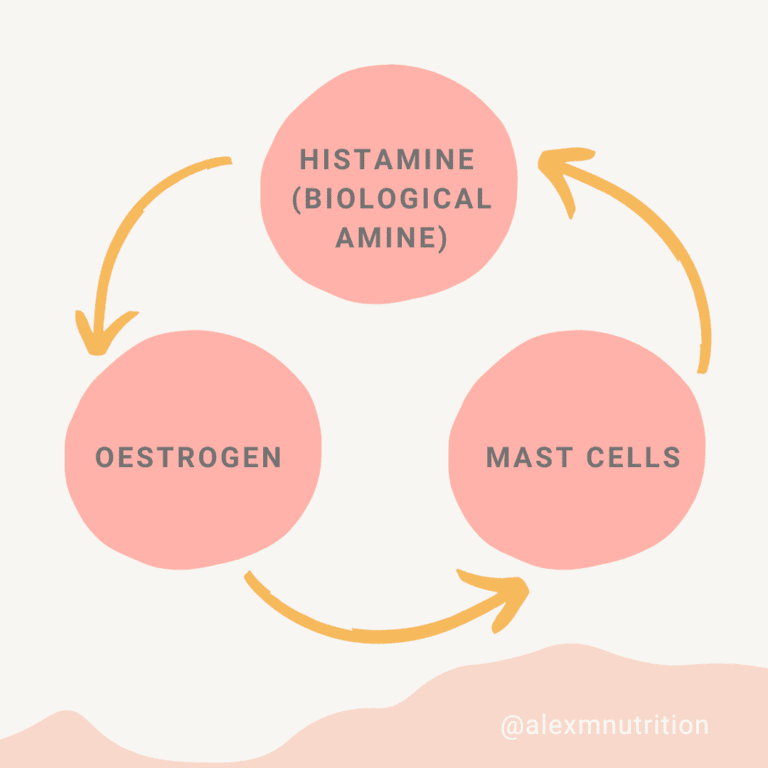
Endometriosis & histamine intolerance
Many women with Endometriosis are unknowingly suffering from a ‘histamine intolerance’ that can be making
EXCELLENT Based on 34 reviews
 Posted on Google
 Eliza YoungI cannot imagine where I would be if I hadn’t been introduced to the amazing Alexandra. I was really struggling with my hormones and trying to conceive. Now not only has my partner praised the changes in me, I’m also pregnant with my first child She really is a miracle workerPosted on Google
 Rachel PulverAlexandra is an incredibly knowledgeable and passionate practitioner. I thought I knew how to care for my health before seeing her, but she encouraged dietary changes and recommended supplements that have been invaluable in boosting and maintaining my energy while reducing the pain I experience in association with my endometriosis. She was extremely thorough in exploring all aspects of my physiology and personal history to hypothesise the underlying causes of my symptoms and treat me from a holistic perspective. I highly recommend Alexandra to anyone seeking answers about their health, particularly if they have endometriosis!Posted on Google
 NeridaHighly recommend Alex - I feel I've been in trusted hands, as I have been seeing her for about 8 months now as I go through IVF cycle, laparoscopy, endometriosis management and a pregnancy. She is very knowledgeable and a strong advocate for women's health, which has given me the confidence to advocate for myself more. She has looked at the bigger picture of what is helping or hindering my symptoms. My gut and reproductive health are in a far, far better place now than before I started seeing her.Posted on Google
 ZoeI wanted to wait before writing this review so I could genuinely say that my symptoms had significantly improved. I have been seeing Alex for two years, and during that time we have brought my endometriosis pain to a place where it is fully manageable with minimal pain medication. The difference in my quality of life has been profound. I also work closely with children and was previously getting sick almost every month. Since working with Alex, I rarely become unwell, even after close contact with the flu. With the supplements and plan she has tailored for me, my body now responds quickly and I am able to stay well and maintain my routine. Alex has strong professional connections across both Eastern and Western healthcare practitioners, which has been invaluable. She is meticulous, highly efficient, and an exceptional communicator who truly listens. Every recommendation feels considered and personalised. I began with her endometriosis package and have continued under her care since. She has been worth every cent. I will continue to see Alex long term and confidently recommend her to my family and friends. She will remain my primary practitioner alongside the GP she connected me with for as long as she is practising.Posted on Google
 Claudia CirjakHighly recommend Alex for tailored support during your endo journey. She is extremely thorough and detailed throughout the process. She is so well educated on the topic of women’s health and all things endo. Definitely reach out to Alex!Posted on Google
 Mel AbreyI love that I can have each appointment via Zoom. Perfect for my busy schedule. And Alex is wonderful and so knowledgeable. My health has benefitted greatly is so many areas since joining her program in April. Very grateful and thankful.Posted on Google
 Maria MejiaI started seeing Alex back in January, and since then my health has improved so much. My endo symptoms are gone. I have energy again! I rarely get sick anymore, my immunity has improved so much. My sinus symptoms have improved. Overall I feel more calm and in control of my health again. Alex is very knowledgeable and empathetic, and I'm so grateful for the guidance she's given me. Thank you again Alex for everythingPosted on Google
 ElizaAfter long time of feeling stuck with endo and fatigue, I started working with Alexandra which is when things began moving in a positive direction for me. Working with her for almost a year has been life-changing. My period pain level already decreased from 7-9 to 2-4 and we expect further improvements. Another win is that I am now getting off of antidepressants which is highly supported by the improvement of my overall health, as well as finding support and agency in alleviating my long-lasting symptoms. Alex always impresses me with the depth and complexity of her knowledge and research. At the same time she is attuned to and accepting of my rhythm and current capacity, making this big undertaking of healing endo at its roots, a stress and pressure-free experience. Alex is an exceptional practitioner, and I believe that our work together will benefit me for years to come.Posted on Google
 Lauren WI can't express enough how grateful I am for Alex's guidance and care. I started seeing Alex in 2023 when I was struggling with multiple health issues, and she has been an unwavering source of support and knowledge ever since. She's taught me so much along the way & has changed my life for the better. Thanks to Alex I've been able to manage stage 4 endometriosis without needing any further surgeries since being under her guidance, and my periods are now pain-free. She's also been instrumental in helping me with histamine issues and mold exposure. Beyond her expertise she is so kind + caring and has always made me feel heard since day one. I highly recommend Alex!!! She's made a world of difference in my health + getting my life back and I'm forever thankful to have had her on my side through it all.Posted on Google
 Jordann Crawford-AshI have been seeing Alex since November last year after a severe endometriosis diagnosis post laparoscopy. I was so overwhelmed about moving forward with this illness until I found Alex. She understood my situation completely and I felt supported and heard from our first consultation. I improved from the first month of treatment, and now, only 4 months in, I feel like a completely different person. I am back living a full life and my pain symptoms are already more than halved, something I personally haven't been able to achieve with other treatment options. Her treatment plans are detailed and extremely knowledgeable, incorporating the latest scientific research and natural medicine practices, and we have slowly introduced lifestyle and diet changes and supplements over time, making things extremely manageable. I truly can't recommend Alex enough!
Scientific References
- Teede HJ, Tay CT, Laven JSE, et al. International evidence-based guideline for the assessment and management of polycystic ovary syndrome 2023. Monash University. 2023. https://www.monash.edu/medicine/mchri/pcos/guideline
- Rotterdam ESHRE/ASRM-Sponsored PCOS Consensus Workshop Group. Revised 2003 consensus on diagnostic criteria and long-term health risks related to polycystic ovary syndrome. Human Reproduction. 2004. https://pubmed.ncbi.nlm.nih.gov/14711538/
- Rosenfield RL, Ehrmann DA. The pathogenesis of polycystic ovary syndrome: the hypothesis of PCOS as functional ovarian hyperandrogenism revisited. Endocrine Reviews. 2016. https://pubmed.ncbi.nlm.nih.gov/27510479/
- Diamanti-Kandarakis E, Dunaif A. Insulin resistance and the polycystic ovary syndrome revisited: an update on mechanisms and implications. Endocrine Reviews. 2012. https://pubmed.ncbi.nlm.nih.gov/23065822/
- Carmina E, Azziz R. Diagnosis, phenotype and prevalence of adrenal hyperandrogenism in polycystic ovary syndrome. Fertility and Sterility. 2006. https://pubmed.ncbi.nlm.nih.gov/16772158/
- Palomba S, Santagni S, Falbo A, La Sala GB. Complications and challenges associated with polycystic ovary syndrome: current perspectives. International Journal of Women’s Health. 2015. https://pubmed.ncbi.nlm.nih.gov/26366095/
- Escobar-Morreale HF. Polycystic ovary syndrome: definition, aetiology, diagnosis and treatment. Nature Reviews Endocrinology. 2018. https://pubmed.ncbi.nlm.nih.gov/29569621/
- Rutkowska AZ, Diamanti-Kandarakis E. Polycystic ovary syndrome and environmental toxins. Fertility and Sterility. 2016. https://pubmed.ncbi.nlm.nih.gov/27553244/
- Lim SS, Norman RJ, Davies MJ, Moran LJ. The effect of obesity on polycystic ovary syndrome: a systematic review and meta-analysis. Obesity Reviews. 2013. https://pubmed.ncbi.nlm.nih.gov/23114091/
- Gordon CM, Ackerman KE, Berga SL, et al. Functional hypothalamic amenorrhea: an Endocrine Society Clinical Practice Guideline. Journal of Clinical Endocrinology & Metabolism. 2017. https://pubmed.ncbi.nlm.nih.gov/28368518/